The Magnificent Ambersons

Page turner: 5/10
Heart tugger: 7/10
Thought provoker: 6/10
Overall: 3 stars

After a rather prolonged hiatus, I am pleased to return with a full report of Booth Tarkington’s The Magnificent Ambersons. Which I liked. I found it a bit unoriginal, but that may be the result of a century of hindsight. Still, I liked it.

The Magnificent Ambersons is the second book in Tarkington’s ‘growth’ trilogy. Try as I might I could not get my hands on a copy of the third and final book in the series, I couldn’t find it. Which is both a testament to me liking the second book, and perhaps a reflection on the second also being the ‘best’ of the three. Anyway, the ‘growth’ that the title refers to is the changing dynamic of the American mid west … and how settlements grew to towns and cities as the turn of the twentieth century saw the huge boom in urban populations.

The Ambersons were the relative nobility of the small Midwestern town as it was originally settled. They owned vast swathes of land, the great house, and had the most beautiful and elaborate items brought over from the East. Georgie Amberson is the protagonist of the novel, and is the grandson of the founding father who amassed the fortune. And Georgie is a spoiled brat of the most spoiled type. His really only redeeming feature as a child is that he uses the term ‘riff raff’ which always made me chuckle. The story (predictably, to modern eyes) progresses as the town grows, the Ambersons’ wealth diminishes and new money comes to take their place. It is the story of the transition of a town to a city, and the way that young Georgie is forced to reconcile with changing circumstances. Tarkington does a good job of succinctly and believably narrating both parallels in the story. I won’t say whether or not Georgie shows himself of being of strong moral fiber in the end.

The trouble is – I feel I have read it all before. Perhaps it was one of the first of its kind to talk about that boom in Midwestern America, but it is awfully reminiscent of stories of the Industrial Revolution and the rise of New Money vs. aristocracy in Europe as well as on the East Coast of the U.S. Published in 1918 was The Magnificent Amberson’s a trailblazer? Or a very good example of this ‘genre’ of story? I don’t think my literary history is good enough to know the answer, but I do wonder. This shortcoming, however, is what made it a three for me, and not a higher rating.

Still, Tarkington’s book is a slim read, and definitely fulfilling. It’s about growth – both physical and personal, and as such is quite rewarding to follow along with!

Brave New World

Page turner: 8/10
Heart tugger: 7/10
Thought provoker: 10/10
Overall: 5 stars

Brave New World, by Aldous Huxley, is brilliant.

In my head, I thought it would be a sort-of precursor to 1984: author creates totalitarian regime for political point. Point made well and clear, and good story along the way an added bonus. (Not to diminish from 1984, which I will certainly get to and give proper consideration in due course!) A Brave New World is so much better than that. Huxley, in 1932, publishes a book that creates an entirely different planet- full of crazy rocket technology, syntethetic experiences, and sky scrapers- that hasn’t, really, aged. And this new planet isn’t really the result of an intentially extreme political party gaining world dominination. Instead, it is an entirely new culture. A new world. One that I had never even considered feasible.

The brave new world which Huxley writes about is a world of ‘decanting’ rather than ‘birth’; where happiness, consumption, and stability reign at the price of passion, liberty, and independence. Imagine a world where ‘pneumatic’ is the highest of compliments. It’s so very, very backwards from what we all take for granted. But it takes not-very-long before you get into it. Even as I read about the conditioning that people go through in order to create this society of solidarity (think Pavlov … on crack), I felt for them. You feel the pressures of thier invisible constraints. And you empathize.

Cover art for Brave New World

The appropriately eerie cover from my edition of Brave New World

Really, I think this book should have been in the curiculum on one of my university anthropology courses. Talking about seeing things through different lenses. It’s nurture trumping nature – but playing by totally different rules.

Meanwhile, it’s still a good story. Lots of sex (not too explicit), drugs, love, death, and a bit of adventure. And the accessories of the world itself is more novel and fascinating than plenty of ‘modern’ science fiction books.

It’s also incredibly well written.  Concise but descriptive. Clever but functional. And, not to be too blunt, a very readable length. Well edited.

Brave New World is really a commentary about what happens ‘for the sake of progress’. When technology gets us so far – then what? You can see why what happens happens. And simultaneously you can totally comprehend the perspective of ‘ancient’ Shakespeare (his works feature) and of the folks of a ‘Savage Reservation’ whose way of life resembles that of Native Americans at the turn of the 20th century. Sort of.

I will admit that by a somewhat surprising turn of events the two main locations of the book- London and Malpais, New Mexico – are places that I hold rather personal connections with. But that probably just makes it a cheeky 6 stars for me, and a 5 for everyone else. So, if you are looking to read a Great Book, getting many virtual brownie points for high school English teachers the world over, go with Brave New World.

The Prime of Miss Jean Brodie

Page turner: 7/10
Heart tugger: 8/10
Thought provoker: 7/10
Overall: 4 stars

The Prime of Miss Jean Brodie is charming. It is witty, well constructed, emotionally mature, and just … Delightful.

I say all of these things in a way that I hope doesn’t make it seem too ‘girly’ or trivial. Because, although the book isn’t about a great epoch of history, or moment of huge political significance it still holds its own with regards to depth and strength.

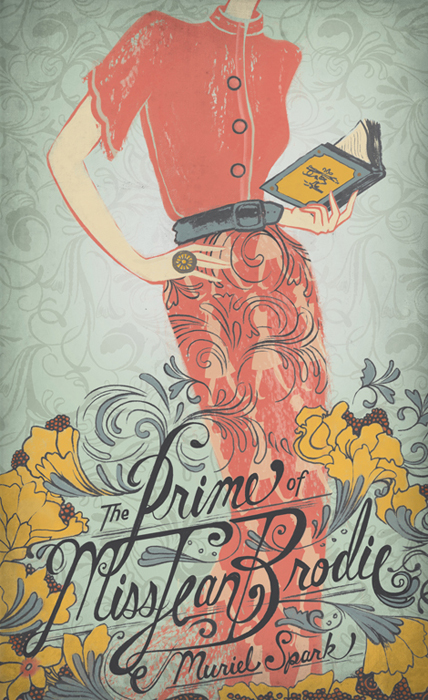
The book is about a Miss Jean Brodie – primary school teacher, art-appreciator, lover, influencer, and overall woman in her prime of life – and her relationship with those around her. Her ‘set’ of six girls who are under her spell (to varying degrees) are all profoundly affected by her, even in ways they themselves (I think) don’t quite appreciate even as adults looking back. It is mostly set in the 1930s (Miss Brodie is quite a fan of Mussolini – he is so organized!) and there is something of an Art Deco feel to the whole book. I am not sure if describing a work of literature as ‘Art Deco’ is some form of metaphor-synesthesia … But it works. Either that or I have been unduly influenced by the cover art of the book, which I think is beautiful.

The Prime of Miss Jean Brodie book cover

Brodie herself is somewhat irresistible if not necessarily loveable, and her girls are outlandish on the surface but still somehow very real. You can’t help but to feel part of them all.

It is perhaps obvious to say that the author, Muriel Spark, is a woman, and sadly not that many female authors feature on the various award-winning book lists.  I count 7 on the Modern Library’s top 100. In this case this book also centres on the lives and livelihoods of women and what they would and should become. Brodie is a  mix of ‘modern’ and ‘traditional’ but Spark knows what she is on about and foibles and prejudices are subtly noted.  Miss Brodie is definitely not what I expected her to be in the opening pages, as as she and the book both develop it is clear how masterful, calculated, and clever Spark is. The author shies from nothing – heck, one of the girls is ‘known for sex’ – and misses even less. And in my head (again, this could be the delightful cover art) she writes with an almost-smile a la Mona Lisa, who is also mentioned in the novel.

Clocking in at a very slim 128 pages, The Prime of Miss Jean Brodie is well judged, well edited, and … well enjoyable. Besides, it is only 128 pages means even if you don’t take my word for it you have very little to lose!

A Passage to India

Page-turner: 7/10
Heart-tugger: 7/10
Thought-provoker: 8/10
Overall: 4 stars

Reading A Passage to India has been a bit like watching the tide come in, on a dark summer night. There is an inevitable slowness to it that builds strongly and beautifully but never (can’t) break out of its own rhythms.  And at the end I feel quite washed away by it.

I am speaking in metaphors, but can’t quite stop myself as I only put the book down a few minutes ago. It is a beautiful and powerful book. Just not a ‘loud’ or ‘obvious’ one. The plot is very, very simple; the book is interesting purely because of its characters. They are developed to be thoroughly and completely human.  They are flawed, irrational, thoughtful and mean but compassionate and totally a product of their own cultures. Discourse – between Indians and Ango-Englishmen, Indians and Indians, or Englishmen with the Anglo-English – always contains subtext, emotion, and misunderstanding. It’s incredibly frustrating. But all the more ‘real’ for it. I Believe in the book.

First published  in 1924, A Passage to India is ranked 25th on the Modern Library’s top 100 books of the 20th Century. And, I agree it should be on that list (though don’t feel particularly entitled to put it in a ranked order). It takes place at about the time it was published in Imperial India. And the book is the story – a study – in how the ruling race and the indigenous one manage to cohabitate a continent in a way that neither fully understands. There is some talk of love, though it isn’t a love story, and politics though it is by no means a polemic. It’s just a story about people – prejudices – and how they clash.

The subtly with which Forster develops the main characters is stunning : aptly named Miss Quested whose own quest causes disaster for all around her, school master Mr Fielding, and ‘Oriental’ Dr Aziz. Forster’s Oriental imbues an Otherness that would likely irk a modern anthropologist, but I think it is more of a trope than a truism. He makes Aziz’s preference towards the emotional and dramatic to be a product of a different human culture, rather than innately irrational and primitive.

It is fair to say that not a huge amount Happens in the book, but that doesn’t really matter. And coming from someone who generally believes that a good book is just a very good story – that’s pretty impressive. Its beauty and slowness and repetition is engrossing. The heat is languid. You just can’t expect that much to happen when it is so hot. And even when it does, there is a distance to it that makes the book have something of a surreal quality. The chant of ‘Esmiss Esmoor’ is still echoing in my brain. I won’t spoil why that’s important, but I will say that the character it refers to clearly my hero of the book. The one who understands it all the best. And it is nice for an old woman to be ‘right’ and pseudo-heroic where others are silly and small and wrong.

Certainly read this book. It isn’t a Wow book, but it is a deep one. I am impressed by it. It also made an impression on me. I also (bizarrely) think reading this first might have made me a bit more compassionate towards some of the characters in Midnight’s Children – though at the same time reiterate to me how much more palatable a book is to me if it takes time to be crafted, controlled, and made human.

Portnoy’s Complaint

Pager turner: 6/10
Heart tugger: 5/10
Thought provoker: 6/10
Overall: 3 stars

Portnoy’s Complaint is funny. And a relief! It isn’t (I don’t think) a book that I would put on the top 100 list of the 20th century (it came 52nd), but it is enjoyable and I appreciate it for its unconventional and ballsy approach to writing.

Alex Portnoy is the narrator, and frankly, the book is a massive diatribe. He is a 33-year-old Jewish man in New Jersey/New York living in the ’60s and obsessed with sex. His life – his overbearing parents, scorning of God whilst maintaining Jewish customs, everything – fulfills all stereotypes. But he still has a few good adventures as he recounts his life stories and rails against his misfortunes and his psyche. And did I mention he was obsessed with sex? Let’s just say there were a few moments reading on the morning train that I was concerned about what other passengers might think of me if they were reading over my shoulder.

If you are put off by a little bit of explicitness, definitely don’t pick this up. And imagine how it must have been received in its day! It caused a tremendous stir, and I can’t but respect him and his publishers for putting it to press. If you are able to push past some obscenities and offensive words to catch the humor (and a bit of irony) of Alex screeching in all caps, ‘LET’S PUT THE ID BACK IN YID’, then definitely give this book a go.

Subtlety is not Roth’s strength; by the end I definitely felt I had ‘gotten it’ about 5 times over. But he does manage to capture Alex’s great frustration and outrage as he sits, fuming, on the psychologist’s sofa. I was outraged with him, if occasionally somewhat more amused and embarrassed by his anecdotes than he was.

I suspect this book is on the list because it was so unprecedented when published. A trailblazer, of sorts, in socially accepted digs at religion, americana, and sex. And it is done in good humor, or so at least I choose to read it. But, given that after all it really is a massive rant I don’t quite think I can give it more than a solid 3.