Rabbit at Rest

Page turner: 5/10
Heart tugger: 7/10
Though provoker: 6/10
Overall: 3 stars

Returning after a holiday hiatus: Rabbit at Rest. Once again, I feel that I have a missing category for ‘language’ or ‘vividness’ as John Updike is a master at both. I was sucked into Harry ‘Rabbit’ Angstrom’s semi-retired world utterly. It just didn’t ‘wow’ me. But maybe I’m being harsh after a fun-in-the-sun vacation.

Rabbit at Rest book jacket

My edition of Rabbit at Rest

Rabbit at Rest is, I learned, the fourth novel in a series of books following the life of Harry Angstrom, a decade at a time. In ‘at Rest’ Rabbit is in his fifties, has heart troubles, and is facing mortality for the first time in his life. To be honest, Rabbit is a bit of an ass: a womanizer, an attention seeker. A not-so-hot father. But then, the people around him aren’t exactly ‘winners’ either, and so it is easy to empathize.  And very easy to feel like Brewer, Pennsylvania is a real place.

Much of this book is an indulgence in nostalgia. Full of poignant memories of past affairs (both sexual and innocent), triggered by simply driving down the street. Rabbit faces them to the extent his character is able – his moral code is willowy at best. And, as the nickname perhaps belies, he does have something of a tendency to flee. And to hump – almost indeterminately. But he bends rather than breaks. And he does love, in his own way.

At some point I will read one of the earlier Rabbit books (I think Updike won more than one award for the series) at which point I will be clued in a bit more on the nickname. But apart from that, I can confirm that the novel stands on its own. In fact, I think I’m rather pleased I read it first.

What I like about Updike’s work (which I had never read before) is a rawness that feels so real. It does what it does SO well … but somehow I am left wanting a little bit more from him. From Rabbit. And *certainly* from his son, Nelson, and his wife, Janice, neither of whom win family-member-of-the-year awards.

Rabbit at Rest is an excellently constructed novel. I liked it. And I liked the window in the world of Harry Angstrom. For all his flaws, I liked him too. I LOVED the way Updike wrote the book. So if nothing else, I’m going to go in search of some more Updike work and see how I get on.

Life of Pi

Page turner: 7/10
Heart tugger: 5/10
Thought provoker: 7/10
Overall: 4 stars

The Life of Pi is a coming of age shipwreck story, about religion and zoology. What more can you ask for?

Yann Martel’s mind must work in such a different way. I suppose that is what creativity is. But the very fact that he managed to construct a story where an Indian boy can be Muslim, Hindu, and Christian (because he ‘just wants to love God’) grows up, literally, in a zoo and gets shipwrecked with a tiger (probably) tipped this book to a four from a 3 plus. That’s quite a lot to fit in. And he does so with aplomb.

What’s interesting to me about the Life of Pi is that I read it for the first time probably about 10 years ago and managed to remember so little of it. I usually can recall most of the major themes of a book, and with this one all I remembered was the shipwreck and the tiger. There’s Quite a lot more to it than that – so I do wonder why my brain didn’t retain them the first time ’round. Maybe I was too overwhelmed by the different themes? I have to say that I definitely enjoyed it more this time than my memory of it a decade ago. I *like* that a boy manages to be three religions. I choose to interpret that move in a way that pokes fun at the institution of religion (rather than the spirit behind it), which appeals to me. But there are enough religious overtures in the book that I also see there is room for different interpretation, and for controversy.

I liked the Life of Pi because I like the story. And the fact that really it is a story for the sake of a story, makes it all the more appealing. I’ll ruin then end if I explain that further, but if you’ve read it you will know what I mean. Which I quite appreciate. There are times when Martel pushes implausibility to become ridiculous, but I can still forgive it. There are a few needless points of view, and I found that I never got particularly upset at any of the more tragic turns of events – which is a bit surprising.

Still, I very much recommend Life of Pi as being something totally different, interesting, fun, and full of animal-life. It’s a grown-up bedtime story.

Brave New World

Page turner: 8/10
Heart tugger: 7/10
Thought provoker: 10/10
Overall: 5 stars

Brave New World, by Aldous Huxley, is brilliant.

In my head, I thought it would be a sort-of precursor to 1984: author creates totalitarian regime for political point. Point made well and clear, and good story along the way an added bonus. (Not to diminish from 1984, which I will certainly get to and give proper consideration in due course!) A Brave New World is so much better than that. Huxley, in 1932, publishes a book that creates an entirely different planet- full of crazy rocket technology, syntethetic experiences, and sky scrapers- that hasn’t, really, aged. And this new planet isn’t really the result of an intentially extreme political party gaining world dominination. Instead, it is an entirely new culture. A new world. One that I had never even considered feasible.

The brave new world which Huxley writes about is a world of ‘decanting’ rather than ‘birth’; where happiness, consumption, and stability reign at the price of passion, liberty, and independence. Imagine a world where ‘pneumatic’ is the highest of compliments. It’s so very, very backwards from what we all take for granted. But it takes not-very-long before you get into it. Even as I read about the conditioning that people go through in order to create this society of solidarity (think Pavlov … on crack), I felt for them. You feel the pressures of thier invisible constraints. And you empathize.

Cover art for Brave New World

The appropriately eerie cover from my edition of Brave New World

Really, I think this book should have been in the curiculum on one of my university anthropology courses. Talking about seeing things through different lenses. It’s nurture trumping nature – but playing by totally different rules.

Meanwhile, it’s still a good story. Lots of sex (not too explicit), drugs, love, death, and a bit of adventure. And the accessories of the world itself is more novel and fascinating than plenty of ‘modern’ science fiction books.

It’s also incredibly well written.  Concise but descriptive. Clever but functional. And, not to be too blunt, a very readable length. Well edited.

Brave New World is really a commentary about what happens ‘for the sake of progress’. When technology gets us so far – then what? You can see why what happens happens. And simultaneously you can totally comprehend the perspective of ‘ancient’ Shakespeare (his works feature) and of the folks of a ‘Savage Reservation’ whose way of life resembles that of Native Americans at the turn of the 20th century. Sort of.

I will admit that by a somewhat surprising turn of events the two main locations of the book- London and Malpais, New Mexico – are places that I hold rather personal connections with. But that probably just makes it a cheeky 6 stars for me, and a 5 for everyone else. So, if you are looking to read a Great Book, getting many virtual brownie points for high school English teachers the world over, go with Brave New World.

True History of the Kelly Gang

Page turner: 5/10
Heart tugger: 6/10
Thought provoker: 6/10
Overall: 3 stars

The trouble with the True History of the Kelly Gang was that I got bored. I didn’t mean to get bored, but I did. I still Liked it, but I just felt like I sort-of-got-the-point-and-you-know-how-it-ends-anyway so, why bother? Perhaps I would have been more gripped if I knew the core elements of his real life in advance (I didn’t) and thus wasn’t spending so much energy trying to keep track of the characters comings-and-goings. There are a lot of them. But even then, I’m not sure.

As I have since discovered in my historical research – Ned Kelly and the Kelly Gang were Australian outlaws primarily active in the 1870s outback. The book is about Ned, his childhood, and (surprisingly briefly) his gang and its exploits as an adult.  The book actually really picks back up in the ending chapter where accounts of his gang’s daring dos really get told.

Ned Kelly's photo

Ned Kelly in 1880

It’s a clever idea, and the structure of the book is quite nice. As a reader, chapters are bunched into manuscripts, that are clearly Ned’s own scribblings of his life on whatever paper he has to hand. In the end, it becomes clear how these documents have been gathered, grouped, and published for the sake of posterity. Neat. I liked it.

Peter Carey does a wonderful job of making Ned a consistent, likeable, pleasant Outback murderer/Robin Hood type character. I liked Ned.

And yet, somehow, after whizzing through the first half of the book or so, I really did get bored. I felt I ‘got’ Ned – what made him tick – and somehow that early revelation made me much less interested in following him and what happened next. The ‘traps’ (police) are all corrupt. You want your own land. You are oppressed. Pride and honor are of the utmost importance to you. As are horses. Check check check check check. Now get on to your exciting burglaries, get-aways, tell us about your suits of armour! Explain to me more about your ending! Tell me what I always wanted to know!

There is very much a good story in the ‘untold truths’ of the Kelly Gang as clearly the man, myth, legend has a great deal going for it. And I did like this attempt. I suppose the trouble is that I keep having to remind myself of that. It was something a bit different, and certainly worthwhile.

Maybe some Aussies can open my eyes, more, to questions that WERE answered in this book that had I been less ignorant of the principle stories of the Kelly Gang before I started I would have found more exciting and compelling?

The Prime of Miss Jean Brodie

Page turner: 7/10
Heart tugger: 8/10
Thought provoker: 7/10
Overall: 4 stars

The Prime of Miss Jean Brodie is charming. It is witty, well constructed, emotionally mature, and just … Delightful.

I say all of these things in a way that I hope doesn’t make it seem too ‘girly’ or trivial. Because, although the book isn’t about a great epoch of history, or moment of huge political significance it still holds its own with regards to depth and strength.

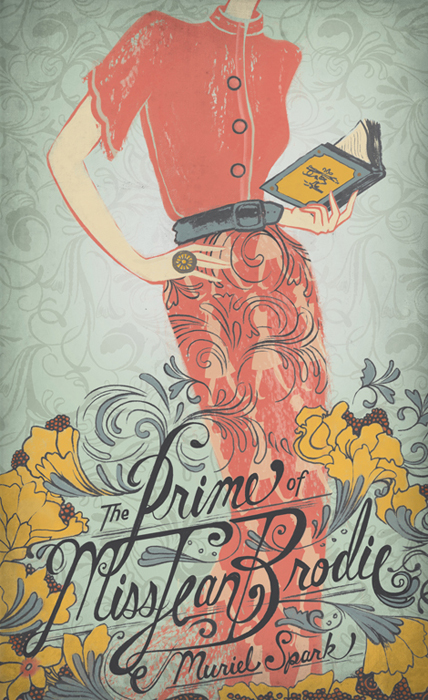
The book is about a Miss Jean Brodie – primary school teacher, art-appreciator, lover, influencer, and overall woman in her prime of life – and her relationship with those around her. Her ‘set’ of six girls who are under her spell (to varying degrees) are all profoundly affected by her, even in ways they themselves (I think) don’t quite appreciate even as adults looking back. It is mostly set in the 1930s (Miss Brodie is quite a fan of Mussolini – he is so organized!) and there is something of an Art Deco feel to the whole book. I am not sure if describing a work of literature as ‘Art Deco’ is some form of metaphor-synesthesia … But it works. Either that or I have been unduly influenced by the cover art of the book, which I think is beautiful.

The Prime of Miss Jean Brodie book cover

Brodie herself is somewhat irresistible if not necessarily loveable, and her girls are outlandish on the surface but still somehow very real. You can’t help but to feel part of them all.

It is perhaps obvious to say that the author, Muriel Spark, is a woman, and sadly not that many female authors feature on the various award-winning book lists.  I count 7 on the Modern Library’s top 100. In this case this book also centres on the lives and livelihoods of women and what they would and should become. Brodie is a  mix of ‘modern’ and ‘traditional’ but Spark knows what she is on about and foibles and prejudices are subtly noted.  Miss Brodie is definitely not what I expected her to be in the opening pages, as as she and the book both develop it is clear how masterful, calculated, and clever Spark is. The author shies from nothing – heck, one of the girls is ‘known for sex’ – and misses even less. And in my head (again, this could be the delightful cover art) she writes with an almost-smile a la Mona Lisa, who is also mentioned in the novel.

Clocking in at a very slim 128 pages, The Prime of Miss Jean Brodie is well judged, well edited, and … well enjoyable. Besides, it is only 128 pages means even if you don’t take my word for it you have very little to lose!