The Sense of an Ending

I’m back! After a ridiculously long hiatus (during which time I could only bring myself to read books with either a) happy endings or b) containing at Least One Of dragons, wizards, or gnomes), here we go again.

So I started with Julian Barnes’ The Sense of an Ending; short and sweet. It was a superb re-introduction to the world of Serious Literature.  (Not that I’m knocking the fab genres that have filled my last 18 months. Fantasy books, I love you.) I haven’t read Barnes before, and, in spite of an ending which I have a strong sense of leaving me unfulfilled, I really enjoyed my first foray into his work.

The Sense of an Ending is a personal history – the memoirs of Tony Webster, focusing on the events of his adolescence and young adulthood. It confronts suicide, sex, depression, history, mental health, and a host of other huge issues in a hyper personal, extremely specific way. In a way that is almost light hearted … only it isn’t, quite.

One of the most fascinating things about the book is the sense of perspective Tony, our protagonist and narrator, gives us. I like him. I want to believe him. But he proves that his own memory (and indeed his own interpretation of his memory) is suspect. Sometimes he owns up to that – other times less so. So what do we believe? Is there an answer?

As the title suggests, this book is really all about the Ending. Essentially the critical pieces of the puzzle are only unveiled in the final two pages. At which point it is far too late to ask more questions of Tony, or really to figure out what, exactly, happened. In many such books I end up Angry – WHY would the author do this to me!? What a friggin’ cop out! But somehow, with Barnes, I got the sense (pardon) that he Knew what he was doing. And that there IS an answer, if only I was smart enough to unpick it. The book meanders so much and yet is so concise, I really can’t fault it. It’s a splendid contradiction.

So I ask of you – please go read this book. And please tell me what you think of the ending. I would love to figure it out.

The Sea, The Sea

Page turner: 5/10
Heart tugger: 3/10
Thought provoker: 6/10
Overall: 2 stars

The strongest single word I can think of to describe Iris Murdoch’s The Sea, The Sea is:

Insufferable.

I realize that normally the word is applied to a single character, rather than an entire book (of them), but it still fits.

At first I found The Sea to be a bit quaint … sweet. A retired theatre-man by the name of Charles Arrowby turns out to have some hidden depths! He likes a more ‘basic’ life by the ocean, he starts to write his own memoirs/diary/autobiography. He has a way with words, and not too bad a means of doing ‘character sketches’ of the many people that have passed through his life. Sure, he’s a bit arrogant and self centred, but, so what?

But then the book keeps going, and not only does his own self-absorption become more apparent, so too does that of ALL the other characters. They all seem to be caricatures of themselves. Those whom Charles loves, we (the readers) quickly cannot stand. Don’t even get me STARTED on Hartley. Yes, he finds his ‘one lost love’. I don’t even feel bad telling you that. She’s … gross. Get over it.

Now, much of the point of the book is to really dig deep into the motivation of people – how love affects (and disaffects) us all, in so many ways. But do at the main characters need to be so insufferable to tell such a story? And did Murdoch need to throw in a few gratuitous hallucinations of dragon/Loch Ness style monsters and ‘Orientalism’ in the form of super-natural rescues? I really don’t think so. Maybe it was meant to be a nod to magical realism or some such. I just found it a bit peculiar, particularly in the context of this narrative.

So, clearly, not a winner for me. I read it. I’m OK with having read it. I liked BITS of it – there are moments of drama and of quiet smiles. But overall? Nah.

Nifty cover, though.

The Sea, The Sea

The Orphan Master’s Son

Pager turner: 7/10
Heart tugger: 7/10
Thought-provoker: 9/10
Overall: 4 stars

The Orphan Master’s Son is about North Korea. And it is brilliant.

What is so powerful about it is that it brings to mind other dystopian novels like Brave New World and 1984, only The Orphan Master’s Son is (essentially) real. Or based in a real place, where unspeakable things happen. Perhaps I should caveat that to say that of course unspeakable things happen everywhere in the world, but the particular ones that Adam Johnson narrates in TOMS were beyond anything that my little Western mind had ever even considered within the bounds of modern reality. Shows what I know.

The book is in two parts – the first tells the story of the protagonist Pak Jun Do’s young-young adult life and the second is the story of Commander Ga. It is difficult to explain how the two relate without giving the essential narrative ploy of the book away (have you seen ‘The Sixth Sense’?) but Johnson’s story-telling technique in breaking up the book this way is elegant, simple and very effective.

Pak Jun Do grew up in an orphanage, and being an orphan is apparently the worst thing to be in North Korea. Though never overtly explained, the implication is that if you have no parents to protect you, you are at the whim of the State to make use of you as it sees fit. So the first half of the book is really a series of horrible, entertaining, mind-boggling misadventures. Tunnelling, pain training, starvation, kidnapping, sailing, shark attacks and (of course) American Sneak Attacks! are all present. It starts a bit slowly but, given all that action, it is safe to say that it builds and becomes engrossing.

The best way to summarise the second half of the book is to say that Commader Ga’s world is a world-turned-upside-down. Imagine putting your whole reality under a microscope and questioning every-single-tiny assumption. It’s like that. It’s scary (but not hide in the corner scary – it’s blow-your-mind scary).

Throughout the book Johnson tells the story of the Orphan Master’s Son through a few different voices, including that of the omnipresent loudspeakers blasting ‘news’ to North Korean citizens. The technique works to force you to consider the different perspectives in the book, but there are a few chapters/characters that I think have more limited success simply when juxtaposed with the Greatness of the others. Similarly, I couldn’t wait to find out what happens and to explore the other-worldliness of North Korea, but the book is 575 pages long. I noticed.

For such an undertaking, I can totally see why Johnson won the 2013 Pulitzer for The Orphan Master’s Son. It’s astonishing – both in the setting/story and the way he manages to tell it. I heartily recommend.

Schindler’s Ark

Page turner: 6/10
Heart tugger: 10/10
Thought provoker: 8/10
Overall: 4 stars

Schindler’s Ark is an absolutely phenomenal book.  This story of the holocaust is really only believable because it is true. It is fact that the work only barely qualifies as one of fiction that I have struggled hugely with rating it ‘fairly’.

The story of Oskar Schindler and how he saved the lives of over 1,200 Jews during WWII is outrageous. It is a tale of bravado, of love, of ridiculousness, and of cunning. And it is true. The reason that Thomas Keneally chose to write it as fiction seems to be because a) that was the fashionable thing to do in the early 80s and b) to allow him to guess at a few conversations of which there are no records.

But the story reads like non-fiction. It reads like a biography of Schindler – and regularly quotes the many people who were interviewed as part of the book.  His Jewish advisers and beneficiaries, his stoic wife, some Polish/German observers and Nazi participants all contribute. As such, how do I compare it with the ‘actual’ novels on this list? Keneally gets credit, of course, for choosing the topic and the breadth of time covered. He crafts the swathes of anecdotes, formal interviews, and historical documents into a incredibly readable, tragic, brilliant work. But it isn’t ‘his’ story. Not in the way that Hilary Mantel inserts her imagination into Crowmwell’s Wolf Hall. Or at least, it doesn’t *seem* to be.

I gave it a four because I feel like I should be rewarding a novelist’s originality. Otherwise, this book deserves a 5.  Keneally brings the characters and personalities off the page. Schindler is very much a flawed man; but one who became larger than life as circumstance and coincidence presented himself with an almost-godlike opportunity that he uniquely is able to seize.

Little girl in red

The haunting image of Genia, in red, taken from the film Schindler’s List based on Schinder’s Ark.

I have read a lot about the Holocaust, and Schindler’s Ark stands above all the other books I’ve read. It does a brilliant job of balancing the vastness of the loss of life in that era with the reality of the pain and horror of individual losses. How the loss of many millions of lives is in fact the loss of one life, then another, many millions of times.

And, especially for those people who have seen the film adaptation Schindler’s List, who can forget little innocent 4-year-old Genia, dressed head-to-toe in her favorite color red as she toddles towards death? Keneally must have somehow managed to connect Schindler’s memories of the girl in red with the thousands of anecdotes of Cracow ghetto survivors to determine who the girl really was.

Schindler’s Ark is haunting. Triumphant. Read it.

The Prime of Miss Jean Brodie

Page turner: 7/10
Heart tugger: 8/10
Thought provoker: 7/10
Overall: 4 stars

The Prime of Miss Jean Brodie is charming. It is witty, well constructed, emotionally mature, and just … Delightful.

I say all of these things in a way that I hope doesn’t make it seem too ‘girly’ or trivial. Because, although the book isn’t about a great epoch of history, or moment of huge political significance it still holds its own with regards to depth and strength.

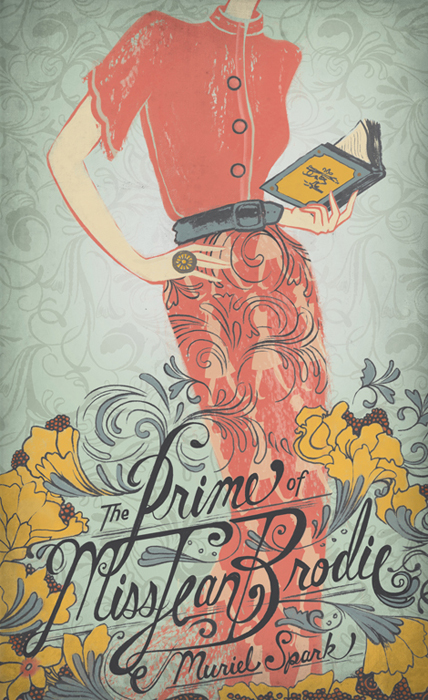
The book is about a Miss Jean Brodie – primary school teacher, art-appreciator, lover, influencer, and overall woman in her prime of life – and her relationship with those around her. Her ‘set’ of six girls who are under her spell (to varying degrees) are all profoundly affected by her, even in ways they themselves (I think) don’t quite appreciate even as adults looking back. It is mostly set in the 1930s (Miss Brodie is quite a fan of Mussolini – he is so organized!) and there is something of an Art Deco feel to the whole book. I am not sure if describing a work of literature as ‘Art Deco’ is some form of metaphor-synesthesia … But it works. Either that or I have been unduly influenced by the cover art of the book, which I think is beautiful.

The Prime of Miss Jean Brodie book cover

Brodie herself is somewhat irresistible if not necessarily loveable, and her girls are outlandish on the surface but still somehow very real. You can’t help but to feel part of them all.

It is perhaps obvious to say that the author, Muriel Spark, is a woman, and sadly not that many female authors feature on the various award-winning book lists.  I count 7 on the Modern Library’s top 100. In this case this book also centres on the lives and livelihoods of women and what they would and should become. Brodie is a  mix of ‘modern’ and ‘traditional’ but Spark knows what she is on about and foibles and prejudices are subtly noted.  Miss Brodie is definitely not what I expected her to be in the opening pages, as as she and the book both develop it is clear how masterful, calculated, and clever Spark is. The author shies from nothing – heck, one of the girls is ‘known for sex’ – and misses even less. And in my head (again, this could be the delightful cover art) she writes with an almost-smile a la Mona Lisa, who is also mentioned in the novel.

Clocking in at a very slim 128 pages, The Prime of Miss Jean Brodie is well judged, well edited, and … well enjoyable. Besides, it is only 128 pages means even if you don’t take my word for it you have very little to lose!